iMart Mobiles — Refurbished Device Retail
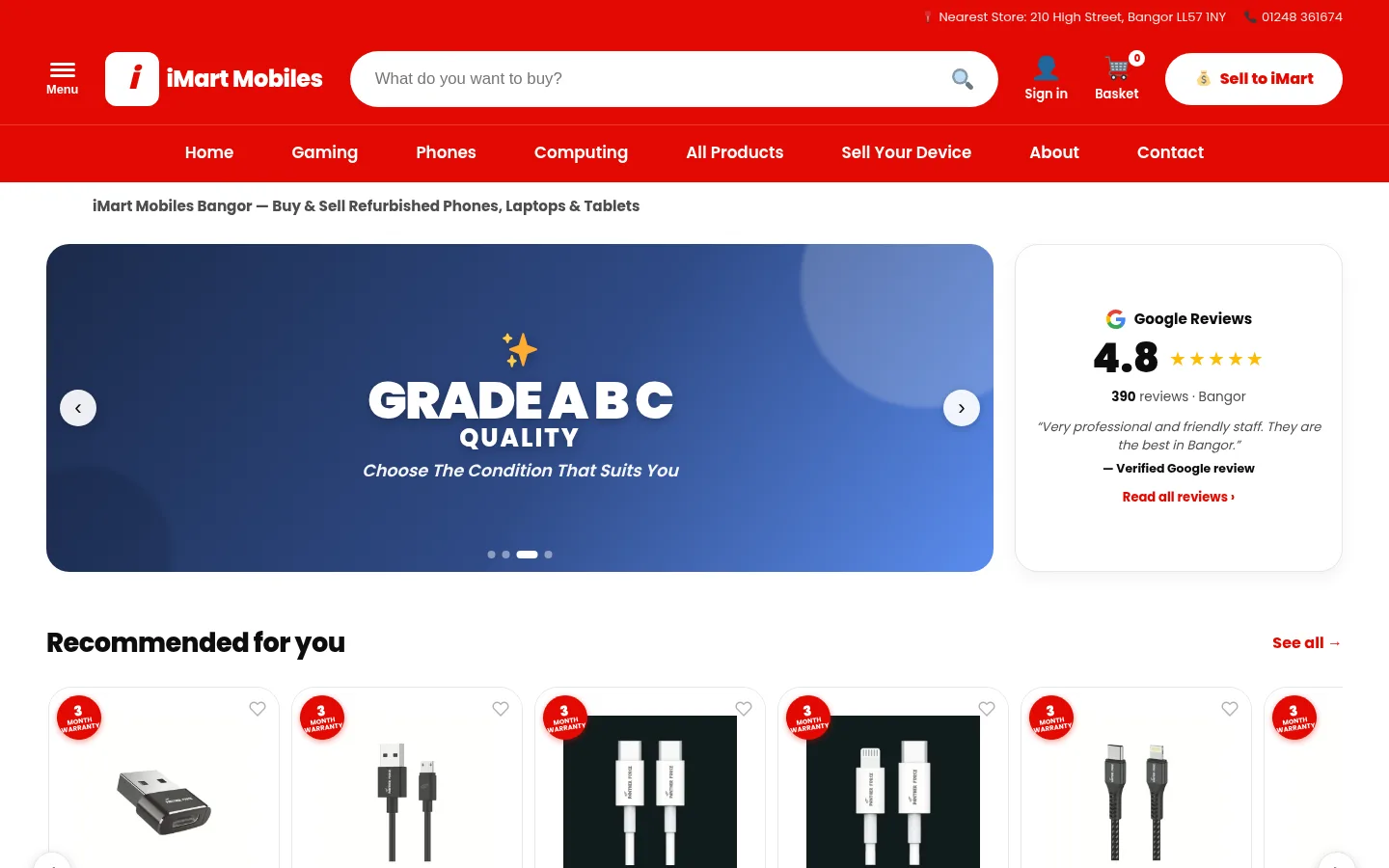
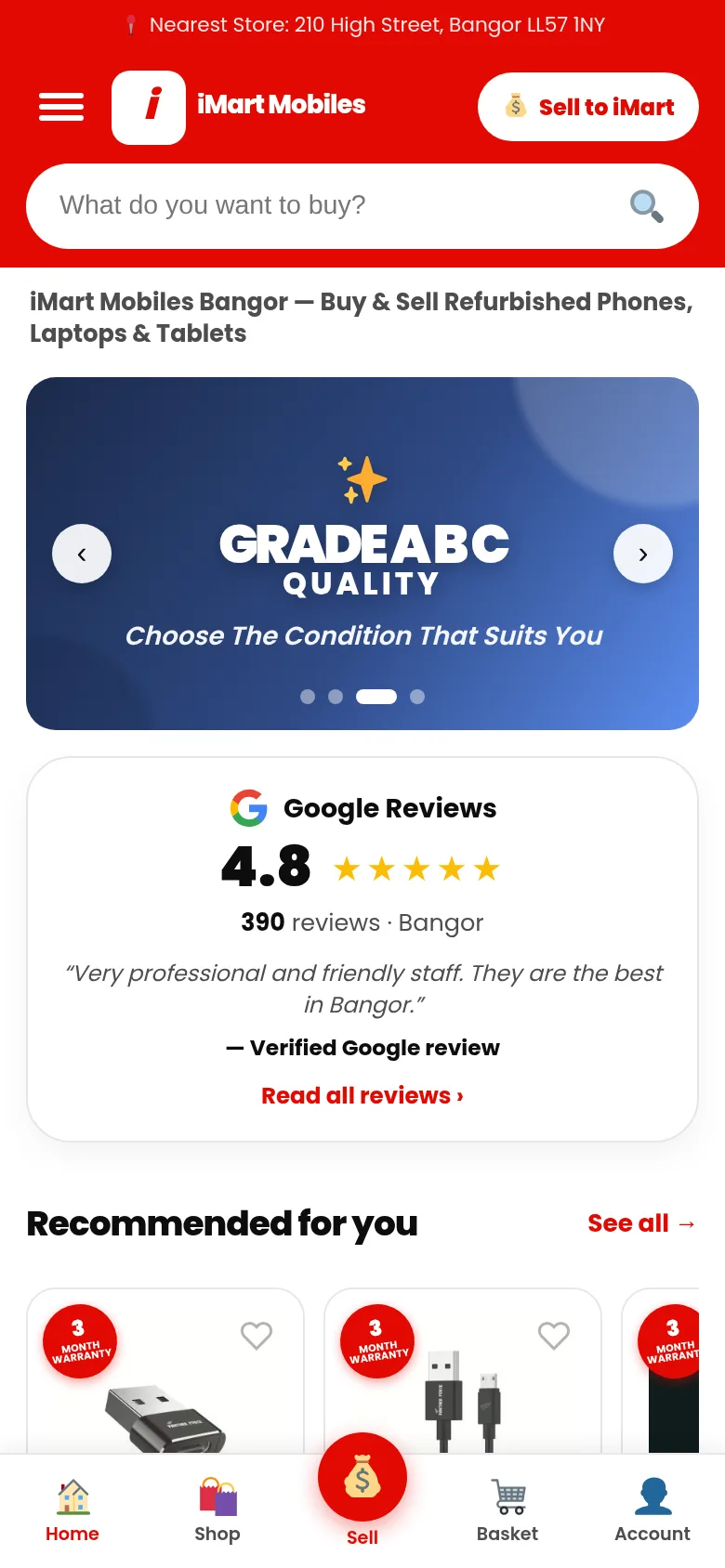
Buy-and-sell refurbished phones, laptops and tablets — graded, tested inventory presented with the trust signals refurb buyers need.
88
GRADER SCORE
38ms
RESPONSE
01 — The challenge
Refurbished electronics carry a built-in trust gap: buyers fear hidden faults, vague grading and no comeback when something breaks. iMart needed its website to do what a glass counter does in person — show the stock, explain the grades, and stand behind the guarantee — for buyers comparing against eBay listings and big-brand refurb programs.
02 — The build
We built the catalog around trust mechanics: clear condition grading explained in plain English, testing and guarantee messaging on every product surface, and buy-and-sell flows in both directions — because trade-ins feed the inventory. The presentation makes graded stock feel curated rather than second-hand.
03 — The result
The site scores 88/100 with a 38ms response. The grading-and-guarantee framing does the heavy lifting refurb retail needs: buyers arrive skeptical and leave with the same confidence a high-street counter provides — plus the sell-your-device funnel keeps inventory flowing without ad spend.
STACK: CUSTOM BUILD · GRADED INVENTORY
Questions this case answers
What makes refurbished retail different from normal e-commerce?+
Trust is the product. Grading transparency, testing claims and guarantees aren't policy pages — they're the primary sales copy, and they belong on every product view, not buried in footers.
How does the buy-side funnel help?+
Sourcing inventory through trade-ins improves margins and brings sellers into the shop who often convert into buyers. The website works both directions of the counter.
Would this translate to US resale businesses?+
Completely — refurb electronics, watches, tools, sneakers: any graded-goods resale lives or dies on the same trust mechanics. This architecture is the template.
Build something like this